


Smart Home Safety Devices for Older Adults

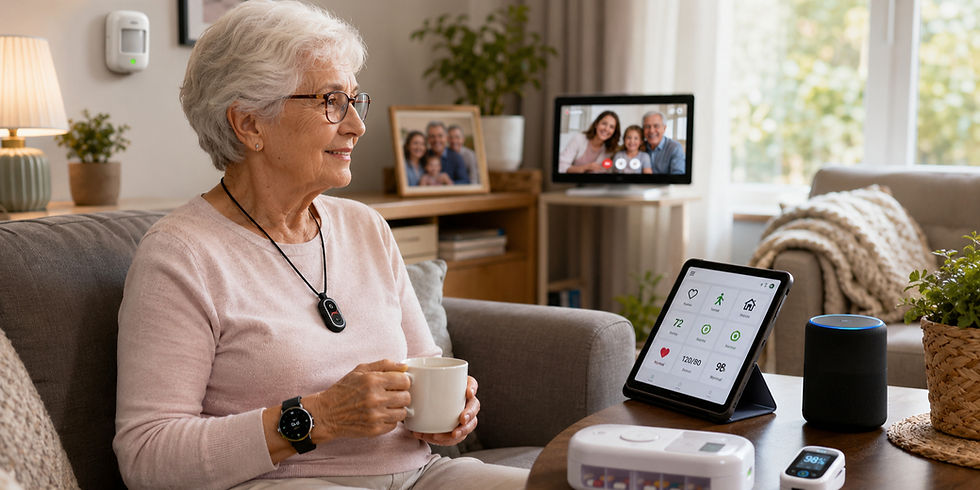
For many older adults, living independently is deeply important. Home is familiar, comfortable, and filled with routines that bring confidence and peace of mind. For loved ones, that independence matters too, but so does knowing that someone living alone has the right support in place.
That is where smart home and wellness devices can help.
These tools are not about replacing human care, family connection, or personal attention. They are about adding another layer of safety, awareness, and reassurance, especially for older adults who live alone. When chosen thoughtfully, smart devices can help support daily routines, reduce risks, and make it easier for family members to stay informed without being intrusive.
Why these devices matter
As people age, certain everyday concerns can become more important. Falls, missed medications, health changes, and delayed emergency response are often top of mind for both seniors and their families. Even small tools that make it easier to notice a problem early or call for help quickly can make a meaningful difference.
For older adults who live alone, the right devices can support:
Personal safety
Emergency response
Medication routines
Health awareness
Daily activity monitoring
Peace of mind for family members
The goal is not to fill a home with technology. It is to choose practical tools that genuinely make life easier and safer.
Fall detection devices
Fall detection is often one of the first things families think about, and for good reason. A fall can be frightening and dangerous, especially if someone is alone and unable to reach a phone.
Fall detection devices are designed to recognize a sudden fall and alert emergency contacts or monitoring services. These devices may come in the form of wearable pendants, watches, or emergency alert systems.
They can be especially helpful for:
Older adults with balance concerns
Anyone with a history of falls
Seniors living alone
Loved ones who want added peace of mind between visits or calls
One of the biggest benefits is speed. If help can be contacted right away, response time may improve significantly.
Presence sensors
Presence sensors can help show whether someone is up, moving around, or spending time in their usual parts of the home. Unlike cameras, these devices are often more discreet and less invasive, which many families appreciate.
Presence sensors may be used to notice patterns such as:
Whether someone got out of bed in the morning
Whether they have been active in the kitchen or living room
Whether unusual inactivity may need follow-up
Whether daily routines appear to have changed
These sensors are not meant to monitor every movement in an uncomfortable way. They can simply provide helpful reassurance that a loved one seems to be following normal daily habits.
Health-tracking smartwatches
A health-tracking smartwatch can be useful for older adults who are comfortable wearing one regularly. Depending on the device, features may include heart rate tracking, fall detection, activity tracking, reminders, emergency calling, and location sharing.
For some seniors, a smartwatch can help with:
Tracking daily movement
Monitoring heart rate trends
Receiving reminders
Contacting help quickly
Sharing important health information with family or caregivers
The biggest advantage is that many of these features travel with the person instead of staying in one room of the house.
Motion sensors
Motion sensors are simple devices, but they can be very helpful in a home where someone lives alone. They can track general movement in certain areas and may also be used as part of a broader safety setup.
For example, motion sensors can help identify:
Whether someone is moving around normally
Whether there has been an unusual lack of activity
Whether nighttime movement patterns are changing
Whether lights should turn on automatically to reduce fall risk
Motion sensors can be particularly useful in hallways, bathrooms, bedrooms, and entryways.
Smart EKG devices
Smart EKG devices can help monitor heart rhythm and may be useful for older adults who need to keep a closer eye on their heart health. These may include portable handheld devices or features built into certain smartwatches.
They can be helpful for tracking:
Irregular heart rhythms
Episodes of palpitations
Heart-related changes worth discussing with a doctor
Symptoms that may need follow-up
These tools are not a substitute for medical care, but they can make it easier to notice patterns and share useful information with a healthcare provider.
Smart blood oxygen monitors
Blood oxygen monitors can be especially useful for older adults with respiratory concerns or those managing certain chronic health conditions. Smart versions can make readings easier to track over time and, in some cases, easier to share with loved ones or caregivers.
These devices may help families keep an eye on:
Oxygen saturation trends
Sudden changes that may need attention
General wellness during illness or recovery
Ongoing monitoring for health concerns
For seniors who live alone, having simple, easy-to-use health tracking devices can make everyday monitoring feel more manageable.
Smart pill dispensers
Medication management is one of the most important parts of living safely and independently at home. Missed doses, double doses, or confusion around schedules can quickly become serious.
Smart pill dispensers can help by:
Organizing medications by time and day
Giving reminders when it is time to take them
Limiting access to the correct dose only
Sending alerts if a dose is missed
Helping family members feel more confident that routines are being followed
For older adults with multiple prescriptions, this kind of device can reduce stress and improve consistency.
Smart SOS pagers and emergency buttons
Sometimes the simplest device is one of the most important. A smart SOS pager or emergency button gives an older adult a quick way to call for help if they feel weak, fall, become dizzy, or sense that something is wrong.
These devices are especially helpful because they are straightforward. In an emergency, ease of use matters.
They can be worn as:
Pendants
Wristbands
Clip-on pagers
Wall-mounted emergency buttons in key areas of the home
For someone living alone, having an easy way to call for help can be one of the most reassuring safety measures available.
Smart doorbells and video calling devices
While health and safety devices are often the focus, everyday connection matters too. Smart doorbells and simple video calling devices can help older adults feel more connected and secure.
These tools can help with:
Seeing who is at the door before answering
Avoiding unwanted visitors or scams
Staying in touch with family more easily
Adding another layer of awareness for loved ones
For seniors who live alone, feeling connected can be just as important as feeling protected.
Smart lights and voice assistants
Not every helpful device is medical. Smart lights and voice assistants can make daily life easier in practical ways.
Smart lights can help reduce fall risk by:
Turning on automatically at night
Lighting hallways or bathrooms with motion
Reducing the need to walk through dark rooms
Voice assistants can help with:
Setting reminders
Making hands-free calls
Checking the weather
Playing music or calming audio
Managing simple routines through voice commands
These tools can make a home feel more manageable and more comfortable.
What families should keep in mind
It is important to choose devices based on the person, not just the features. The best technology is the technology someone will actually use.
For some older adults, a smartwatch may feel natural and easy. For others, a simple SOS button and medication reminder may be far more useful. Comfort, ease of use, battery life, screen readability, and setup should all be part of the decision.
Families should also remember that these devices work best as support tools, not replacements for personal care and human connection.
Technology can help notice patterns, provide alerts, and make emergencies easier to respond to. But regular calls, visits, check-ins, and trusted relationships still matter most.
A thoughtful approach is best
For older adults living alone, the strongest setup is often a simple, thoughtful combination of tools. That might include:
A fall detection device
A smartwatch or health tracker
Motion or presence sensors
A smart pill dispenser
An SOS button
Smart lighting
A few health monitoring devices recommended by a doctor
The right mix depends on health needs, comfort level, and daily routine.
Growing older at home can be both safe and empowering when the right support is in place. Smart devices can help older adults maintain independence while giving loved ones more peace of mind.
From fall detection devices and presence sensors to smart pill dispensers, blood oxygen monitors, and emergency pagers, today’s technology offers many ways to make living alone feel more supported.
The most important thing is not having the most devices. It is choosing the ones that truly fit the person’s life, needs, and comfort.
When technology is used thoughtfully, it can help older adults stay safer, feel more confident at home, and remain connected to the people who care about them.
At Naples Smart Home Watch we install smart home monitoring systems in Naples and the surrounding areas that help homeowners remotely track leaks, temperature, humidity, cameras, entry activity, and critical home conditions while home or away. Ready to protect your home? Schedule your free consultation today.


Comments